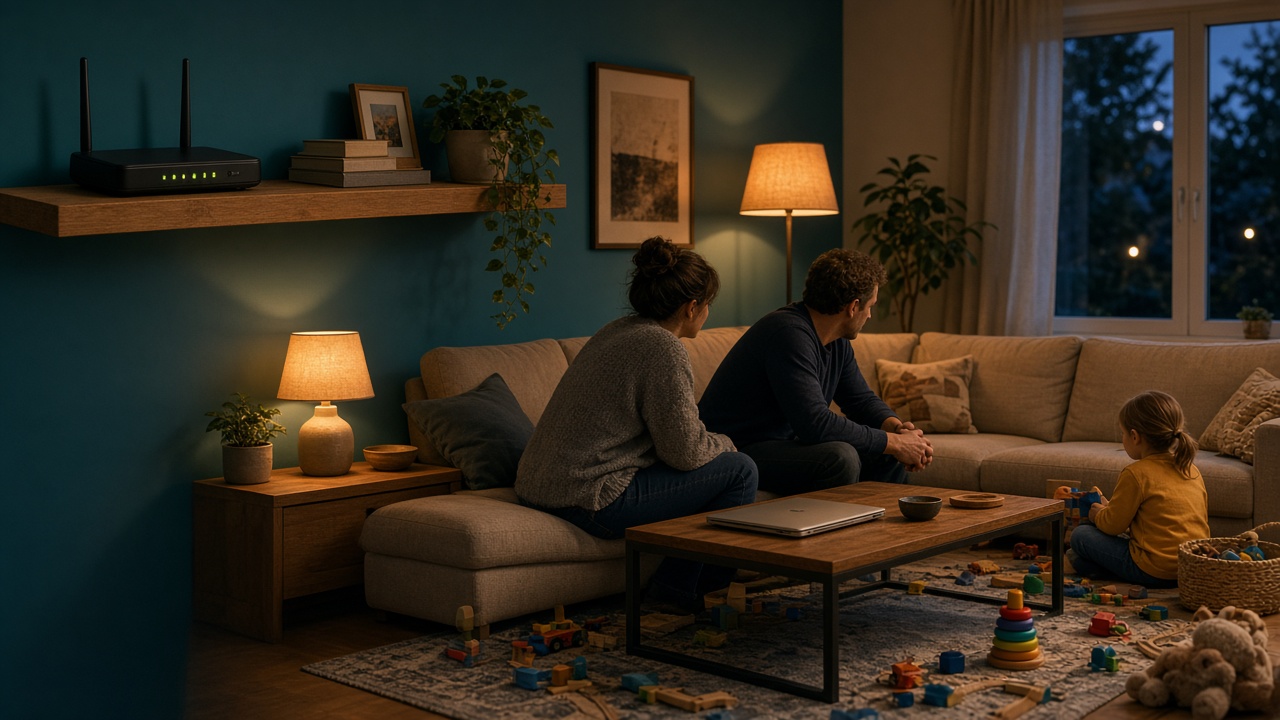
A home connection already carries schoolwork, video calls, streaming, software updates, and the quiet traffic that keeps phones and computers current. Asking whether that connection could also be useful means asking whether spare capacity might later support approved work outside the household. Usefulness is not a slogan and not a promise of money. It is a question of fit for the people who live with the line every day. An adult can look at the connection the family already pays for and decide whether a defined share could be offered without exposing the private network, personal files, or the routines that depend on a steady link.
MetaEdge describes The NEST as a contributor network planned for 2026, rather than a service families can treat as already open everywhere. The company material speaks of a light browser extension or a desktop node meant to connect unused bandwidth with approved enterprise demand. Those statements are design descriptions to check in the final documentation. Participation, if offered later, is for adults aged 18 and over. Children do not install nodes. Any reward would be variable and is not guaranteed, because it would depend on eligibility, demand, location, capacity used, and the terms in force. This is parental education, not financial or legal advice.
What a useful connection means at home
Useful, in this household sense, does not mean squeezing more tasks into an already busy evening. It means noticing that a connection paid for all month is not equally busy every hour. There are times when calls, lessons, and downloads need the full line, and quieter stretches when much of the capacity sits unused. An adult can treat that difference as information. Spare capacity is a technical observation, not an instruction to hand the connection over, and not a forecast of income. The first useful step is simply to see the line as a shared household utility with peaks, lulls, and a monthly cost.
A productive connection still has to serve the people who rely on it. Homework uploads, a medical appointment by video, a parent working from home, and a game played by someone in the family all have a claim on the same link. Those uses are not obstacles to a future idea. They are the reason any sharing decision comes second. If a service cannot leave enough room for ordinary life, it is not useful to that household, whatever it might offer elsewhere. Adults can write down the hours that must stay clear before they read a single product page.
Usefulness also includes the freedom to say no. A household can understand bandwidth, nodes, and enterprise demand and still decide that the present connection should remain only a family utility. That choice is complete. It does not require a technical excuse. Curiosity and caution can sit together: learn the vocabulary, keep the router’s admin details private, and wait for final terms if a product is still on a roadmap. The NEST is planned for 2026. Until availability, countries, and conditions are published for a specific market, there is nothing a family needs to install in order to be prepared.
Keep the family network separate from shared capacity
A home network and an internet connection are related, but they are not the same thing. The connection is the path from the household to the wider internet. The home network is the private side: phones, laptops, printers, speakers, cameras, and the router settings that tie them together. Making a connection useful should never mean inviting outside work into that private side. A careful design keeps family devices, file shares, and local logins walled off from whatever traffic a node might carry. Parents can hold that distinction even before they evaluate a named product.
MetaEdge’s material says The NEST is designed so that enterprise traffic is encrypted and isolated, and so that personal files, browsing history, and local storage stay untouched. It also says enterprise requests are meant to reach the public web, not the household’s own devices. Those are important claims because they describe a boundary families care about. They are still claims to verify in the privacy notice, the technical notes, and the settings of the released software. Isolation is meaningful only when the product that actually ships behaves that way, and when the adult who installs it can see how to pause or remove it.
Exposure can also be ordinary and accidental. A shared folder left open, a router admin page reachable with a default password, or a device that trusts every other device on the Wi-Fi can matter more than a future node. Preparing the connection starts with closing those everyday gaps. Update the router, replace default passwords, and turn off remote administration unless a trusted adult truly needs it. None of this is a promise that sharing will be safe. It is the minimum hygiene that belongs to the household whether or not anyone later opts in. The family network stays a private utility first.
Bandwidth belongs to the whole household
Bandwidth is easy to picture as a personal feature of one computer. In a family it is usually a single contract serving many people. One adult’s experiment can change the evening for everyone else if it fills the upload path during a call or a cloud backup. That is why a useful connection is planned at household scale. Look at the plan’s download and upload speeds, any data cap, and the hours when the line is already crowded. Upload is often the tighter limit, and many home plans are built for receiving more than they send.
A calm test does not require new software. For a week, notice when the connection feels strained and what the household was doing at the time. Several video calls, a game update, and a backup can coincide without any sharing service at all. Those notes become a baseline. If an adult later tries a node, the same notes help show whether ordinary use still feels the same. MetaEdge’s material says The NEST is intended to run without slowing personal browsing, while also making clear that real performance depends on configuration and connection conditions. Families should treat that as a claim to observe, not as a guarantee.
Provider rules belong in the same conversation. Some internet contracts limit resale, servers, or continuous sharing, and some say little either way. An adult can read the acceptable-use terms or ask the provider in plain language before installing anything. This is not legal advice, and a forum reply is not a contract. If the terms are unclear, waiting is a reasonable household decision. Write down the answer next to the plan name and the date. A useful connection is one the family is allowed to use in the way it intends, with enough capacity left for school, work, and the ordinary life already underway.
What The NEST is described as doing
The NEST, as MetaEdge presents it, is not a second router and not a way for strangers to join the home Wi-Fi. The announced idea is narrower. An adult account holder would install supported software, when it is available, and choose whether eligible unused bandwidth may be used for approved enterprise requests. The company describes a path from spare capacity, through MetaEdge, to business demand for web data. Potential rewards, in that description, follow actual use and the terms offered in a given market. Nothing in that sketch requires a child to create an account or to leave software running on a personal device.
The roadmap in the company material places a bandwidth network in 2026 and labels it as announced. Later ideas, including storage and computing in 2027 and a longer-term robotics concept in 2028, are explicitly future concepts and may change. Families do not need to prepare the home for phases that are still only described. The practical question for a connection is the first phase, and only once it exists where the household lives. Until then, learning the difference between a private network and shared upstream capacity is enough. Installing unofficial tools, or anything offered by an unknown account, is not a way to get an early start.
If a launch does reach the household’s country, the adult decision is still local. Check who may open an account, which software is supported, what the node is allowed to use, and how rewards are calculated. Ask how to pause, disconnect, and uninstall, and whether any of those steps carries a penalty. The supplied material describes pause and disconnect as available without penalties. Confirm that in the terms you are actually shown. Rewards, if any, remain variable. They are not a wage, not a bill payment plan, and not a figure this guide can estimate, because no honest estimate exists before demand and terms are real.
Boundaries before an adult opts in
Boundaries are more useful when they are chosen before installation, not negotiated after the first busy evening. A household might decide that no sharing runs during school hours or work calls, that only one named computer may participate, and that children’s devices are out of scope entirely. It might name one adult as the account holder and agree that another adult reviews any change to the terms. These rules are ordinary household management. They do not require trust in a forecast. They make a later yes smaller, easier to watch, and easier to reverse. Write them where both adults can find them.
The account itself should match the age and responsibility the product requires. Participation in this model is for adults aged 18 and over. A teen who is skilled with computers is still not the right person to accept terms, connect a node, or watch a reward balance. Skill is not the same as legal capacity or household authority. Parents can welcome questions and still keep the installer, the password, and the off switch in adult hands. If the only willing operator would be a child, the household is not ready, and the honest decision is to wait.
Money boundaries matter just as much. Do not spend on a new computer, a faster plan, or extra electricity in the hope of a return. This guide will not suggest an earnings figure, because inventing one would pretend that demand is already known. If participation ever exists, compare any reward with the costs you can actually see, including power, wear, and the value of an uncrowded connection. If the numbers are unclear, treat the activity as optional and small. Essential bills, savings, and children’s needs do not belong in a trial of new infrastructure. A variable reward is not a plan for household income.
How to talk about a useful connection at home
Children can understand a home connection without being asked to run it. A simple explanation is enough. The family pays for a path to the internet. That path is busy sometimes and quiet at other times. Some companies, now and in the years ahead, may pay to use spare paths for work that is not the family’s own. Adults decide whether this house will take part. The explanation can stop there. It does not need fear, and it does not need a promise that the quiet hours will turn into money. Curiosity is welcome. Recruitment is not.
Older children may ask sharper questions. They may want to know whether the router can see their messages, whether a node reads homework, or whether a friend at school is already being paid. Answer the privacy point directly. Family messages and files are not the resource under discussion, and a design that claims isolation should be checked against real documentation before anyone trusts it. Answer the money point just as directly. No one can honestly say what a household will receive, and a story from a friend is not evidence. Participation, when it exists, is an adult choice with variable results.
End the conversation with the household’s own rule, not with a product name. For example: only an adult may install sharing software, children’s devices stay out, and nothing is installed while The NEST remains a 2026 plan rather than a service in this country. Repeat the rule when someone forwards a link, a video, or a claim about easy income. A useful connection is a quiet piece of family infrastructure. It should remain understandable to the people who pay for it, and it should remain closed to anyone who is not responsible for the account.
Frequently asked questions
Does a useful connection mean opening the home network to outsiders?+
No. The private side of the home, including family devices and local files, is separate from the path to the wider internet. A careful approach keeps that private side closed. MetaEdge says The NEST is designed so enterprise traffic stays encrypted and isolated from personal files and browsing history. Treat that as a design claim and confirm it in the final documentation before any adult opts in.
Can our household install The NEST today?+
The NEST is planned for 2026. Availability, supported countries, and final terms should not be assumed in advance. Until an official offer exists where you live, there is no need to install sharing software in order to understand the idea. Tools or early-access promises from unknown senders are not a substitute for the published product.
Could sharing slow the internet the family uses every day?+
Any use of bandwidth can affect a shared connection, especially on the upload side. Company material says The NEST is intended not to slow personal browsing, and it also notes that real results depend on setup and on the line itself. Adults can watch a normal week first, then compare. If calls, schoolwork, or work suffer, the practical decision is to pause or not to participate.
Will the household earn a predictable amount?+
No. Rewards are variable and are not guaranteed. They would depend on eligibility, actual demand, location, capacity used, and the terms of the offer. This article does not estimate earnings, and it is not financial advice. Do not buy equipment or change a home plan in anticipation of income.
Can a teenager install the node if a parent agrees?+
No. Children do not install nodes, and participation is for adults aged 18 and over. A parent’s permission does not transfer the account, the terms, or the off switch to a child. Teenagers may ask questions and learn the ideas. The decision, the installation, and any review of rewards stay with an adult.